
Global factors and FII activity will dictate trends in domestic equity markets this week while assembly poll results of Maharashtra and Jharkhand may impact stocks on Monday, say analysts. Stock markets witnessed a spirited recovery on Friday with benchmark Sensex and Nifty notching the best single-day gains in more than five months and offering relief after weeks of correction.

Global funds, according to Christopher Wood, global head of equity strategy at Jefferies, are now beginning to pay more attention to India with the market now offering 30 companies with a market capitalisation over $25 billion.

If you are buying a bond to cater to your regular income needs, check the interest distribution schedule.

Industrial production and inflation data, quarterly earnings from IT majors and global trends would drive the equity markets in a holiday-shortened week, analysts said. Moreover, foreign fund trading activity, movement of the rupee and global crude oil prices would also dictate terms in the market, they added. Equity markets would remain closed on Friday for 'Dr Baba Saheb Ambedkar Jayanti'.

Equity indices slipped in the negative territory on Wednesday after a two-day breather, with the BSE Sensex tumbling 709.54 points following weak trends in global markets. Unabated foreign fund outflows also played spoilsport for the bourses. The 30-share BSE Sensex tanked 709.54 points or 1.35 per cent to settle at 51,822.53. During the day, it declined 792.09 points or 1.50 per cent to 51,739.98.

Foreign Portfolio Investors (FPIs) have pulled out over Rs 10,000 crore from Indian equities in the first three weeks of September, primarily due to rising US interest rates, recessionary fears, and overvalued domestic stocks. Before the outflow, FPIs were incessantly buying Indian equities in the last six months from March to August and brought in Rs 1.74 lakh crore during the period. Mayank Mehra, smallcase, manager and principal partner at Craving Alpha,believes that strong economic growth prospects, attractive valuations, and government reforms could support foreign investment flows in the next month.

IndusInd Bank was the top loser in the Sensex pack, shedding over 3 per cent, followed by Tata Steel, Bajaj Auto, HCL Tech, Sun Pharma and Tech Mahindra. On the other hand, HDFC twins and Bajaj Finance were the gainers.

RBI's interest rate decision, quarterly earnings and global cues would be the major driving factors for equity markets this week, analysts said adding that the impact of the Union Budget could linger on this week. Trading activity of foreign investors will also be a key driver for the markets, experts noted. "US and India's manufacturing PMI for January to be released on Monday, will be the key macro data to watch out for.
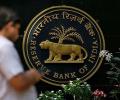
The RBI on Wednesday slashed key interest rate by 25 basis points, for the second time in a row, to support a shuttering economy hit by reciprocal tariffs imposed by the US. Following the rate cut, the key policy rate eased to 6 per cent providing relief to home, auto and corporate loan borrowers.

What is killing the risk appetite of the bond buyers is the inconsistency in the central bank's approach. It needs to allow the yield to find its own level, gradually. To ensure that, the RBI may adopt a similar approach with which it handles a slipping rupee, asserts Tamal Bandyopadhyay.

Investors have become poorer by over Rs 10.36 lakh crore in the last four trading sessions as the domestic equity benchmarks extended their losses amid weak global trends. The Sensex and Nifty closed in the red for the fourth straight session on Friday amid continued selling by foreign institutional investors. The BSE Sensex ended 427.44 points or 0.72 per cent lower at 59,037.18.

With more favourable view on Indian economy and business environment under the Narendra Modi government, the risk premium for Indian papers began to climb down.

India is among the three least-favoured Asian stock markets, according to BofA Securities whose survey found that 10 per cent of fund managers are underweight on Indian equities from a 12-month perspective.

Among the Sensex firms, IndusInd Bank, Tata Steel, Tata Motors, Sun Pharma, Infosys, Mahindra & Mahindra, Infosys, NTPC, Bharti Airtel, HCL Technologies and Axis Bank were the biggest gainers. Tech Mahindra and Bajaj Finance were the laggards.

Spread between earnings yield and bold yield lowest since 2013; dividend yield and bond yield lowest since 2008.

'It is going to be a tough balance for the RBI to manage economic stability and ensure smooth government borrowing.'

Industry players said the sharp sell-off in February forced many companies to put off their listing plans

Foreign investors made a significant turnaround and injected over Rs 1,500 crore into Indian equities in February, reversing the massive outflows seen in the preceding month, primarily due to robust corporate earnings and positive economic growth. Additionally, Foreign Portfolio Investors (FPIs) continued to be bullish on the debt markets as they put in over Rs 22,419 crore during the month under review, data with the depositories showed. Looking ahead to March, the outlook for FPI flow appears promising, provided the current economic trajectory and corporate performance sustain their positive momentum, potentially continuing to attract foreign investment into Indian equities, Mayank Mehraa, smallcase manager and principal partner at Craving Alpha, said.

Equity benchmark indices Sensex and Nifty on Friday reversed their six-session losing streak and rebounded more than 1 per cent on value buying in auto, IT, financial and energy stocks. Better than expected quarterly financial results of corporates also boosted investor sentiments even as uncertainties persisted over the escalating tensions in the Middle East, according to analysts. In a largely range-bound trade, the 30-share BSE Sensex rose 634.65 points or 1.01 per cent to settle at 63,782.80 points.
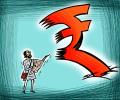
Foreign investors have continued selling in the Indian market, pulling out a massive Rs 85,790 crore (around $10.2 billion) from equities this month due to Chinese stimulus measures, attractive stock valuations, and the elevated pricing of domestic equities. October is turning into the worst-ever month in terms of foreign fund outflows. In March 2020, FPIs withdrew Rs 61,973 crore from equities.
Worries related to the Iran-Israel conflict, quarterly earnings and foreign investors' trading activity are the key factors that would dictate stock markets this week, analysts said. Besides, trends in Brent crude oil and movement of the rupee against the dollar will also be crucial factors. This week will be crucial for the market amid ongoing worries about the conflict between Iran and Israel, said Pravesh Gour, Senior Technical Analyst, Swastika Investmart Ltd.

'We continue to view India as a standout within EM.'

Stock markets would take cues from the upcoming macroeconomic data announcements and global trends besides keeping a watch on the trading activity of foreign investors, analysts said. The last batch of the ongoing earnings calendar would trigger stock-specific action, traders said. "This week, we have to deal with macroeconomic data on both the domestic and global front.
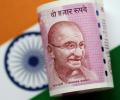
The volume in the anonymous trading platform, NDS-OM, was Rs 7,210 crore - less than half the normal volume, but not as bad as the start of the day indicated.
Equity benchmark indices Sensex and Nifty ended almost flat in highly volatile trade on Thursday amid the lack of any immediate trigger. The 30-share BSE Sensex dipped 5.43 points or 0.01 per cent to settle at 66,017.81. During the day, it hit a high of 66,235.24 and a low of 65,980.50.

'You can put 25 per cent right now; put another 25 per cent when Nifty corrects another 500 points.' 'At 13,500 put another 25 per cent and at 13,000 one can get fully deployed.'

Foreign investors continued their relentless selling in the Indian equity markets in August, offloading shares worth Rs 21,201 crore due to the unwinding of the yen carry trade, recession fears in the US and ongoing geopolitical conflicts. This came after an inflow of Rs 32,365 crore in July and Rs 26,565 crore in June, data with the depositories showed.

Among the Sensex firms, Maruti, NTPC, Tata Motors, ICICI Bank, HDFC Bank, Reliance Industries, JSW Steel, ITC and Mahindra & Mahindra were the major laggards. Bajaj Finance, Larsen & Toubro, Bajaj Finserv and Titan were among the gainers.

HCL Tech was the top gainer in the Sensex pack, rising over 4 per cent, followed by HDFC Bank, Infosys, NTPC, Nestle India, TCS and HUL. NSE Nifty surged 337.80 points to 14,845.10.

It has mostly been a one-way street for markets that have moved up sharply since July. The front-line indices - the S&P BSE Sensex and the Nifty50 - have gained 6.7 per cent and 7.3 per cent, respectively, in the past three months. The rally in mid- and small-caps has been sharper, with both indices surging 14 per cent and 9 per cent, respectively, during this period. This sharp run has made analysts at Jefferies cautious.

Among the 30 Sensex companies, Kotak Mahindra Bank, Asian Paints, Reliance Industries, ITC, Sun Pharma, ICICI Bank, Axis Bank and JSW Steel were the major laggards. Larsen & Toubro, Tata Motors, Maruti, NTPC, Mahindra & Mahindra and UltraTech Cement were among the gainers.

If they act now, they can reshape the strategic map of Asia without firing a shot. If they wait, the next opportunity will come only after a serious Taiwan Strait incident -- by which time the price will be far higher, and the room for boldness far smaller -- the opportunity may well be lost by then. The question is no longer whether this can or should be done, points out Varun Arya.

While selling started in April, it has intensified this month, with FPIs pulling out $1.1 billion and $2.5 billion from equities and debt market, respectively

Global financial markets are not yet fully factoring in any escalation in the Israel-Palestine geopolitical conflict, said Christopher Wood, global head of equity strategy at Jefferies in his latest weekly note to investors, GREED & fear. The pertinent point about ongoing events in West Asia from a financial market perspective, according to him, is that, despite much talk about a pending ground invasion of Gaza, no such invasion has yet happened. "This is beginning to make GREED & fear wonder if it is ever going to happen.

Equity benchmark indices Sensex and Nifty declined for the second straight session on Friday following selling in banking, financial and select IT shares amid a weak trend in global markets. The 30-share BSE Sensex dropped by 125.65 points or 0.19 per cent to close at 66,282.74 as 16 of its constituents fell and 14 advanced. The index opened lower and fell further by around 513 points to the day's low of 65,895.41 in morning deals.

Spread investments in equities, bonds, gold and cash to tackle volatility advise Nitin Singh, MD and head, and Vinay Joseph, director, investment strategy, Standard Chartered Wealth Management, India.

The last time these two indexes recorded a negative performance on a calendar year basis was in CY19.

'Right now, silver -- and especially platinum -- are very cheap compared to gold. If I were buying today, I would choose platinum.'

In India, bond yields have fallen nearly 70 basis points in the last one year.
Covid-19, US yields, dollar to weigh on equity flows in the near term.
